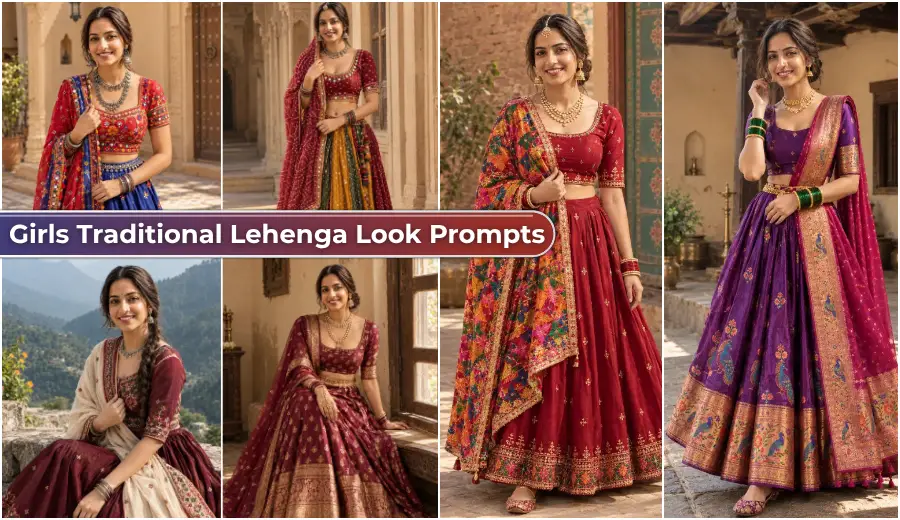
I have tried a lot of traditional outfit edits, but getting a lehenga photo to look natural was not as easy as it first seemed. Many times the dress looked fine, but the jewellery felt wrong, the background looked fake, or the face changed slightly. I created these photo prompts for traditional lehenga looks with different Indian styles, from Rajasthani ghagra choli and Gujarati chaniya choli to Punjabi, Haryanvi and South Indian traditional outfits. You can use any prompt with your own photo and create a full outfit photo with a different pose, camera angle, setting, and mood. The main focus is keeping your real face and natural skin texture unchanged.
I specially tried these Lehenga Look photo prompts with realistic photo editing in mind. You can simply copy and paste any prompt into Chatgpt along with your photo. You can also try the prompts for your own traditional look, ethnic look, desi look, lehenga photo, festival look, wedding look, or Indian outfit photo and adjust the colours or details as you like.
Traditional Lehenga Look Trend: Why People Like It
Traditional lehenga look prompts are popular because they let people try different Indian fashion styles using their own photos. The trend is not only about changing the dress. People enjoy trying different colours, jewellery, poses, backgrounds, and regional outfits in one photo. Rajasthani, Gujarati, Punjabi, and South Indian styles can all give a very different feel. It is also fun to see how the same photo looks with a completely new traditional outfit. Many people use these edits for festive photos, fashion ideas, profile pictures, and social media posts.
Traditional Indian Lehenga Photo Prompts
The best part of this collection is the regional difference between every look. I did not want ten similar red and gold outfits with different backgrounds. Each prompt has its own clothing details, jewellery, pose, camera setup, lighting, and atmosphere. I also kept the face preservation instructions strong because that was one of the biggest things I watched while testing these edits.
Prompt 1. Rajasthani Ghagra Choli Look
This one gives a colourful Rajasthani ghagra choli appearance with a strong desert heritage feel. I liked using earthy red and mustard because the colours work beautifully with traditional mirror and gota details.
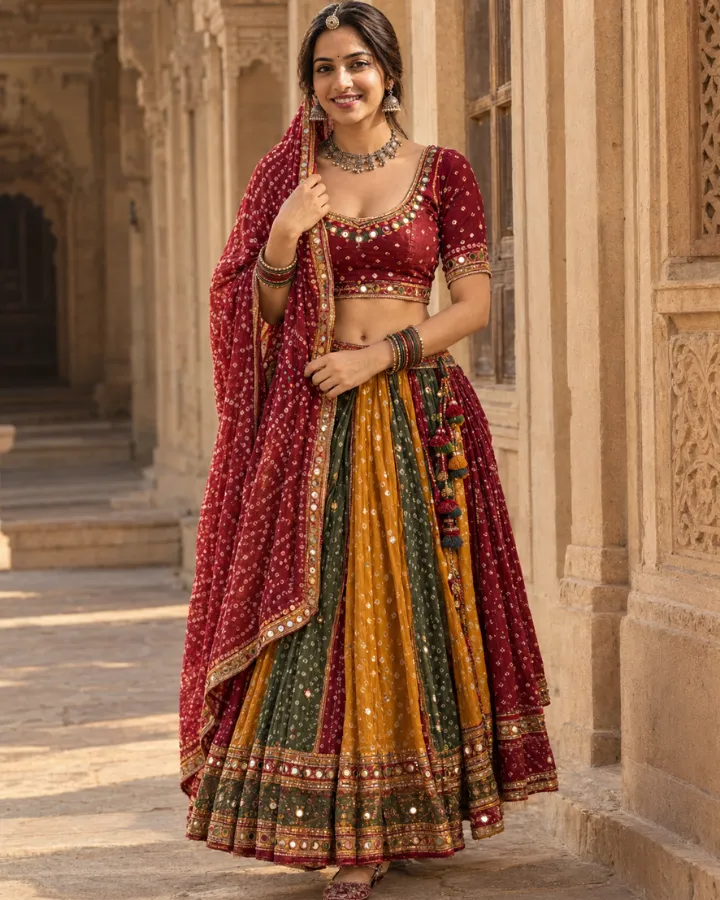
Use the uploaded photo as the strict identity reference and keep the exact face unchanged, including facial proportions, eyes, eyebrows, nose, lips, jawline, natural marks, skin tone, pores, and hairline. Create a full length realistic photograph wearing a traditional Rajasthani ghagra choli in deep maroon, mustard, and muted green, with fine mirror work, gota patti borders, gathered skirt panels, and a lightweight bandhej odhni. Add a traditional borla, silver aad necklace, jhumka earrings, stacked bangles, and delicate anklets. Pose naturally beside an old sandstone haveli, one hand lightly holding the odhni while the other rests near the waist. Use a 50mm lens at eye level, soft evening sunlight, realistic fabric shadows, subtle skin texture, and natural depth. Keep the expression calm and confident. NEGATIVE PROMPT: changed face, identity mismatch, plastic skin, glass skin, fake pores, beauty filter, distorted hands, extra fingers, duplicate jewellery, artificial eyes, excessive HDR, oversaturation, cartoon texture, warped architecture, text, watermark.
Prompt 2. Gujarati Chaniya Choli Style
For this look, I went with the Gujarati chaniya choli because its colourful mirror work gives a completely different character. I kept the pose energetic but natural, without making it look like a staged studio shot. The embroidery and jewellery carry most of the visual detail here.
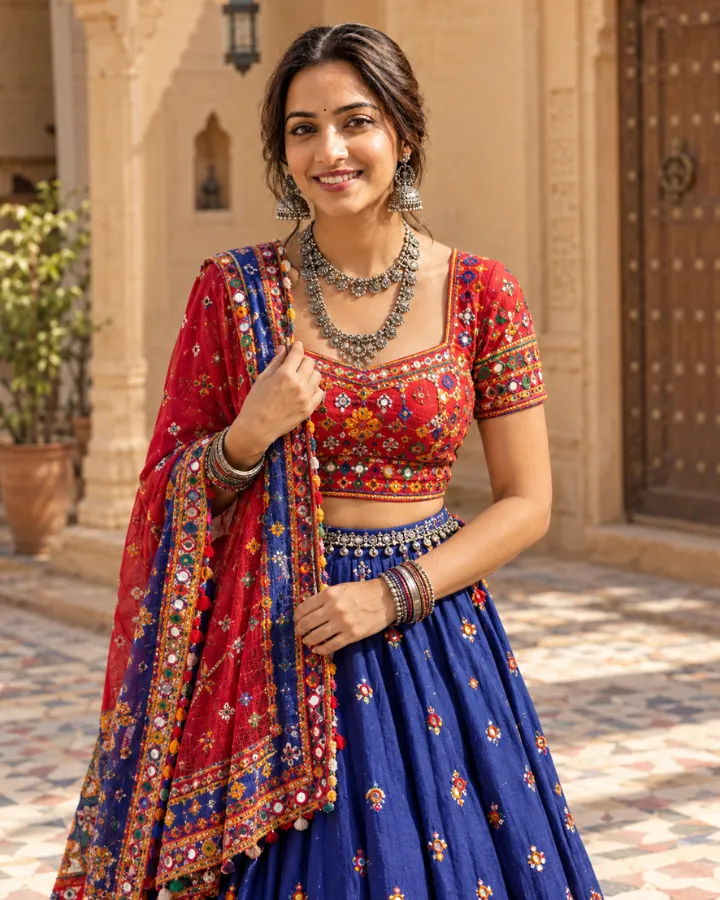
Keep the uploaded face completely unchanged and use it as the only identity source. Preserve the exact eye shape, eyebrow structure, nose, lips, cheek shape, jawline, skin colour, pores, fine marks, and natural facial texture. Dress the subject in a traditional Gujarati chaniya choli featuring a deep royal blue skirt, red choli, colourful mirror work, small embroidered motifs, and a lightweight odhni with a decorative border. Add oxidised silver necklace layers, large traditional earrings, bangles, kamarbandh, and small anklets. Place her in a lively old Gujarati courtyard with patterned flooring and warm sandstone walls. Give her a relaxed standing pose with one foot slightly forward and one hand adjusting the dupatta. Capture at 35mm with natural morning light, realistic shadows, visible fabric weave, and moderate background blur. Keep the expression confident and warm. NEGATIVE PROMPT: facial alteration, different person, smooth artificial skin, glass skin, fake texture, doll face, distorted jewellery, extra fingers, malformed hands, excessive makeup, harsh HDR, unrealistic colours, fake background, text, watermark.
Prompt 3. Haryanvi Daaman Kurti Chundar Look
This is intentionally different from a standard lehenga. Haryana has its own daaman, kurti, and chundar combination, so I used that identity instead of forcing a modern bridal outfit. The result should feel simple, traditional, and grounded.
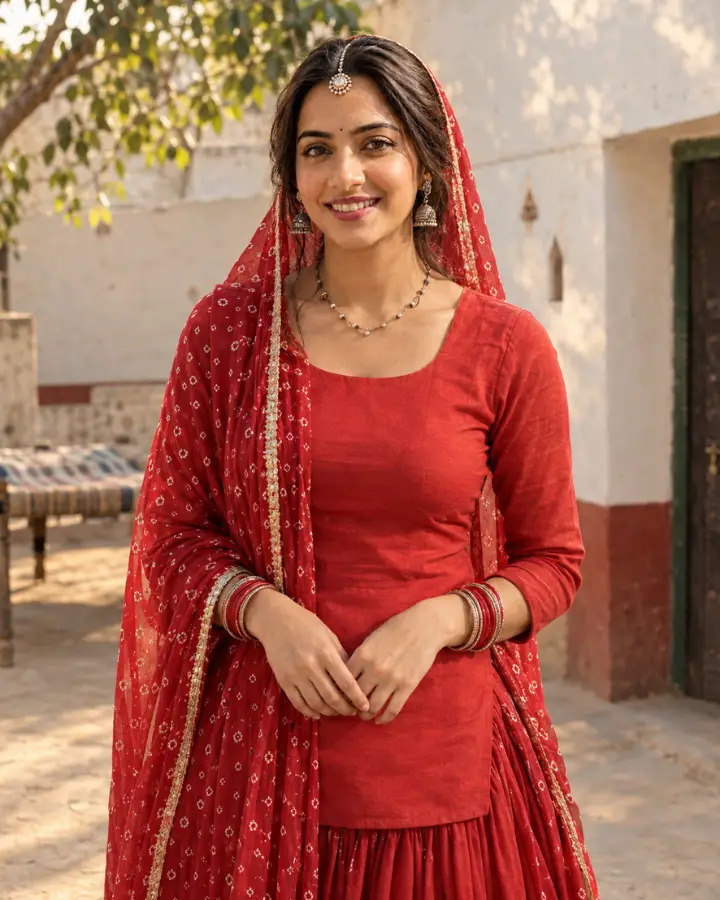
Preserve the uploaded person's exact identity with no facial redesign or beautification. Keep the original eyes, eyebrows, nose, lips, cheeks, jawline, skin tone, pores, small natural marks, and hairline exactly consistent. Create a realistic Haryanvi daaman kurti chundar outfit using a rich red ankle length daaman, a simple fitted kurti, and a traditional chundar with subtle gota edging. Add a borla, silver earrings, traditional bangles, simple necklace, and anklets without making the jewellery oversized. Set the scene in a quiet Haryana village courtyard with limewashed walls, a charpai in the distance, and soft late afternoon sunlight. Pose naturally with both hands relaxed near the waist and a composed expression. Use a 50mm camera, realistic exposure, visible cotton texture, natural skin pores, soft shadows, and gentle background separation. Keep every facial feature faithful to the uploaded image. NEGATIVE PROMPT: face replacement, identity drift, artificial skin, glass skin, excessive smoothing, fake jewellery, distorted fingers, extra limbs, unrealistic fabric, cinematic overprocessing, oversaturated colours, artificial eyes, warped background, text, watermark.
Prompt 4. Himachali Ghagra Choli Pahadi Look
I wanted this one to feel cooler and more earthy, so I moved away from bright wedding colours. The woollen textures, muted embroidery, and mountain background make the styling feel distinctly different from the western Indian prompts.
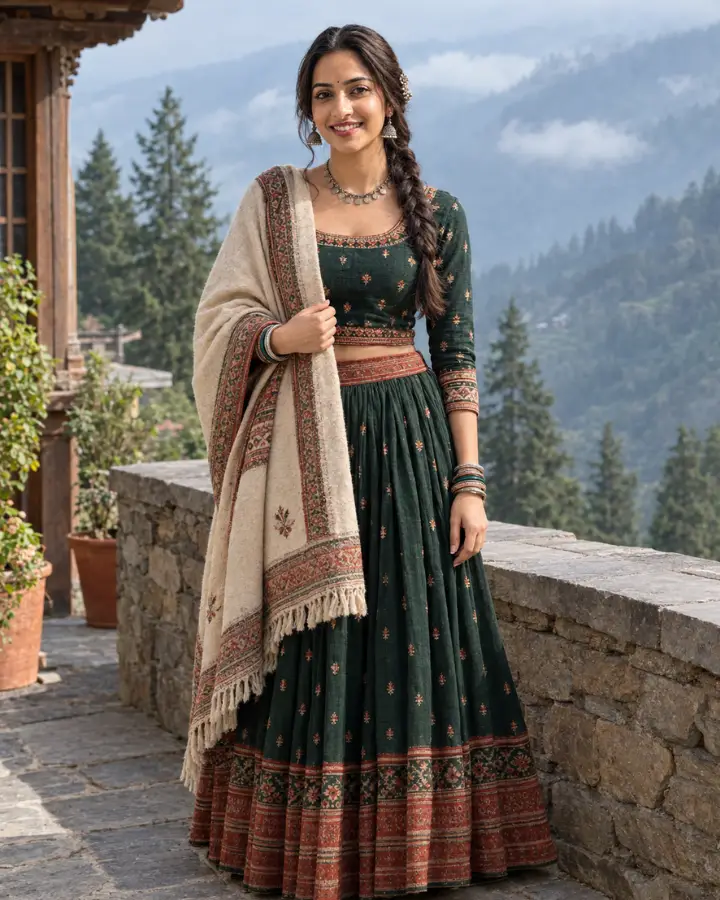
Use the uploaded image as the exact identity reference and do not modify the face in any way. Preserve facial structure, eye placement, eyebrows, nose shape, lips, cheeks, jawline, natural skin tone, visible pores, tiny marks, and original hairline. Style the subject in a Himachali inspired ghagra choli using deep forest green, warm rust, and cream tones with woven borders and subtle traditional embroidery. Add a simple Himachali style shawl, traditional silver earrings, a modest necklace, bangles, and a small decorative head accessory. Place her on a stone veranda overlooking misty Himalayan hills with pine trees in the distance. Use a natural standing posture with one hand resting on the shawl and the other relaxed. Capture using a 50mm lens with cool morning daylight, soft cloud filtered illumination, realistic skin texture, detailed wool fibres, and natural shadows. Keep the expression peaceful and self assured. NEGATIVE PROMPT: altered facial anatomy, identity mismatch, plastic texture, glass skin, fake pores, beauty filter, distorted jewellery, extra fingers, unnatural hands, excessive sharpening, fantasy scenery, artificial fog, oversaturated colours, text, watermark.
Prompt 5. Punjabi Phulkari Lehenga Look
For the Punjabi version, I used Phulkari as the visual language rather than adding random embroidery. The bright dupatta and embroidered details give the photo a festive Punjabi feeling without copying the Rajasthani or Gujarati styling.
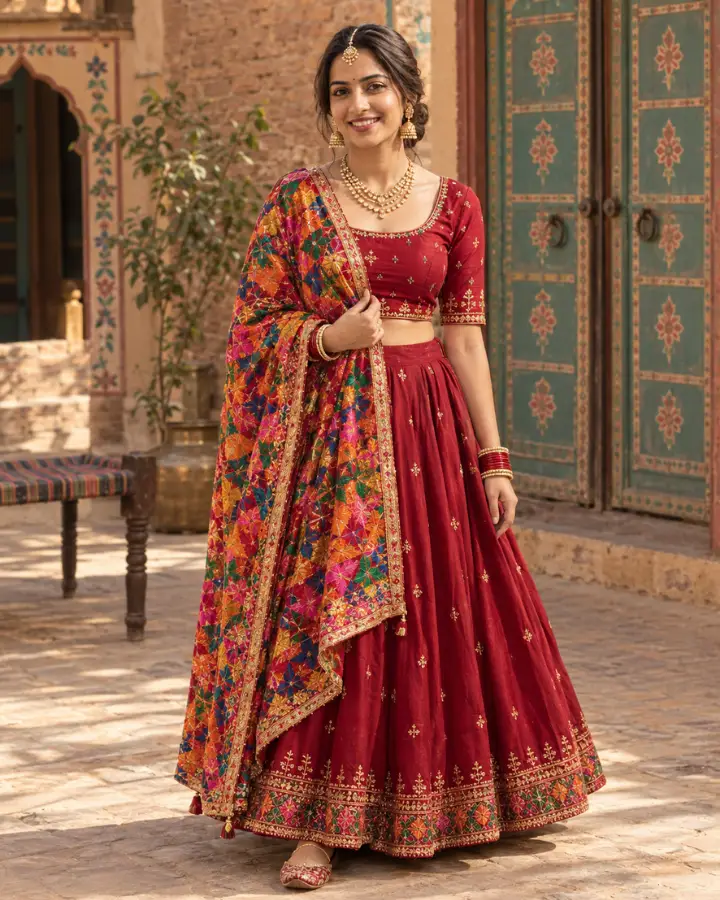
Keep the uploaded face exactly the same as the source photograph and preserve all recognizable facial details, including eyes, brows, nose, lips, cheek structure, jawline, skin tone, pores, natural marks, and hairline. Create a traditional Punjabi inspired lehenga look with a rich crimson flared skirt, fitted matching choli, and a colourful Phulkari dupatta featuring dense floral thread embroidery. Add traditional gold jhumkas, a layered necklace, bangles, a delicate maang tikka, and embroidered Punjabi jutti footwear. Place her in a heritage Punjabi haveli courtyard with painted doors and warm textured brick walls. Use a graceful three quarter standing pose with one hand holding the Phulkari dupatta and the other relaxed. Photograph with a 50mm lens, soft golden daylight, realistic fabric folds, accurate skin pores, subtle makeup, and natural shadow falloff. Keep the face expression relaxed and confident. NEGATIVE PROMPT: changed identity, face reshaping, artificial skin, glass skin, excessive smoothing, fake facial texture, distorted hands, extra fingers, duplicate ornaments, plastic fabric, harsh HDR, unrealistic blur, fantasy background, text, watermark.
Prompt 6. Kumaoni Ghagra Angiya Look
This one takes the collection into Uttarakhand with a quieter mountain style. I kept the colours softer and used traditional metal jewellery so the overall image does not become another heavy wedding look.
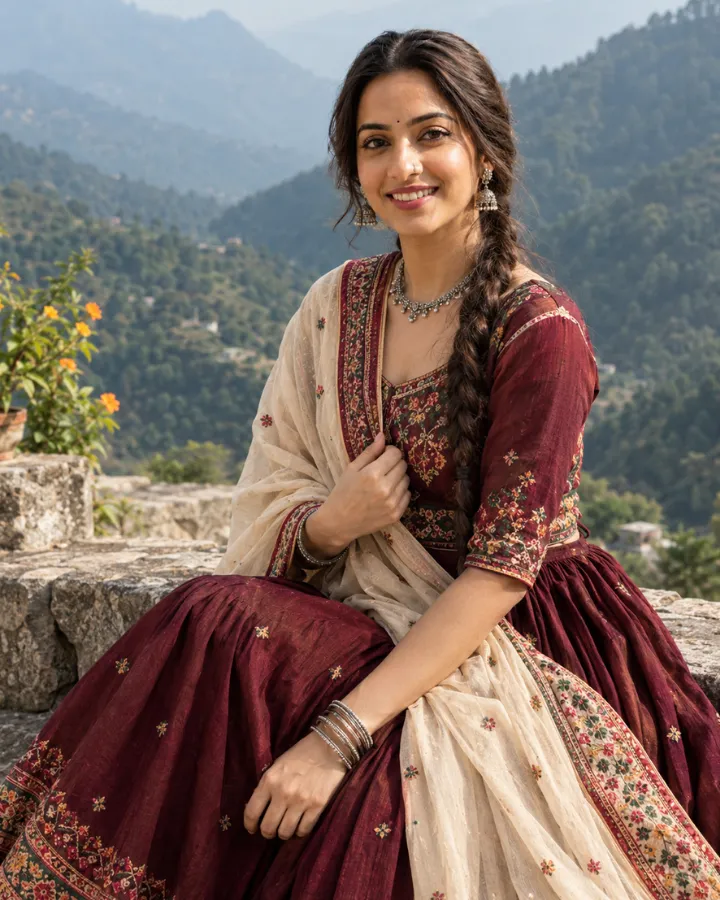
Treat the uploaded photograph as the sole identity reference and preserve her exact facial identity, proportions, expression, eyes, eyebrows, nose, lips, cheeks, jawline, skin tone, natural pores, marks, and hairline. Dress her in an authentic Kumaoni-inspired ghagra angiya ensemble featuring a deep wine gathered skirt with intricate embroidery, a modest embroidered angiya, and a soft cream odhni with traditional woven borders. Add refined silver jewellery including a necklace, earrings, bangles, and subtle nose jewellery. Place her seated gracefully on a rustic stone terrace overlooking layered green Kumaon mountains. Pose her in a relaxed three-quarter side-facing photoshoot position, with the voluminous skirt naturally spread across the foreground; one hand gently holds the odhni near her chest while the other rests naturally over the skirt. Style her hair in a long textured side braid over one shoulder. Use 50mm photography, diffused mountain daylight, realistic fabric folds, detailed silver texture, natural skin pores, soft background depth, and a peaceful editorial mood. NEGATIVE PROMPT: identity change, facial distortion, excessive cleavage, plastic skin, malformed hands, extra fingers, fake jewellery, oversaturation, HDR, CGI, text, watermark.Prompt 7. Banarasi Lehenga Zari Look
This version uses Banarasi silk as the main feature, with detailed zari weaving rather than random digital embroidery. I placed the subject beside a real looking old interior and used window light for a natural textile shoot.
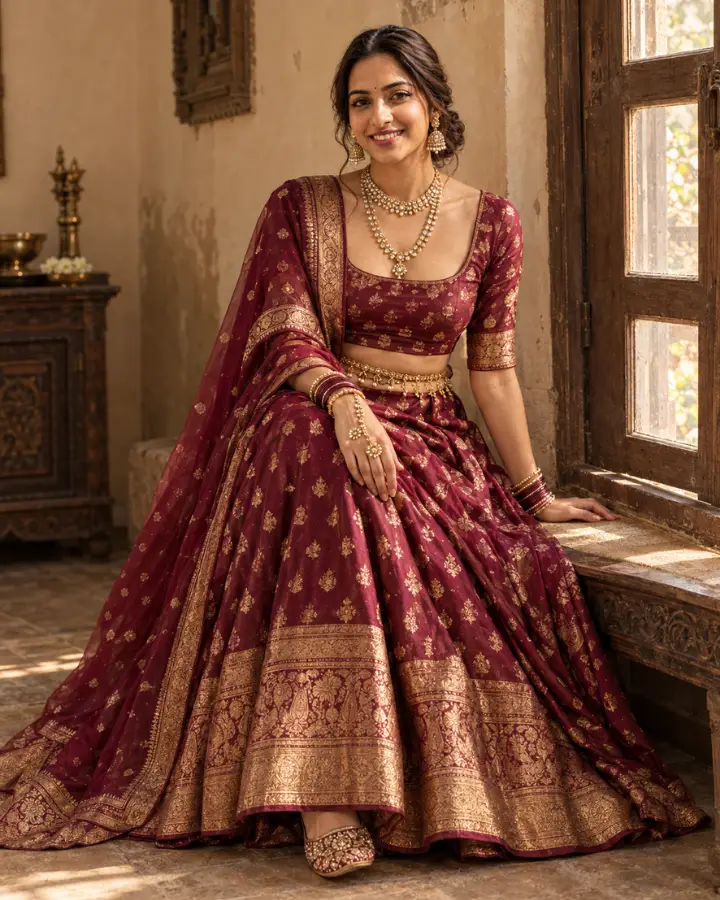
Use my uploaded image as the strict facial identity reference and keep the face exactly the same. Preserve the original eyes, eyebrows, nose, lips, cheeks, jawline, skin tone, pores, natural marks, and facial proportions. Create a traditional Banarasi silk lehenga in deep wine and antique gold with visible woven zari butis, a broad Banarasi border, structured panels, matching choli, and a lightweight dupatta with a rich woven edge. Add kundan jhumkas, a layered necklace, bangles, hathphool, waist chain, and traditional embroidered footwear. The complete lehenga must be visible from head to toe. Place me beside an old wooden window inside a heritage Indian home with aged plaster, carved furniture, slightly uneven flooring, and warm daylight falling naturally across the silk. Pose me in a gentle half seated position on a low wooden bench, one hand touching the lehenga and the other resting beside me. Use an eye level 55mm camera angle with realistic exposure, natural pores, genuine silk reflections, fine textile detail, and soft shadows. NEGATIVE PROMPT: face change, identity mismatch, plastic skin, glass skin, fake pores, excessive retouching, distorted hands, extra fingers, duplicate jewellery, synthetic silk, perfect CGI room, excessive glow, harsh HDR, text, watermark.Prompt 8. Paithani Inspired Maharashtrian Lehenga
For Maharashtra, I wanted the outfit to carry Paithani textile character rather than looking like an ordinary North Indian lehenga. The peacock motifs, zari border, traditional jewellery, and old wada setting give this one its own visual identity.
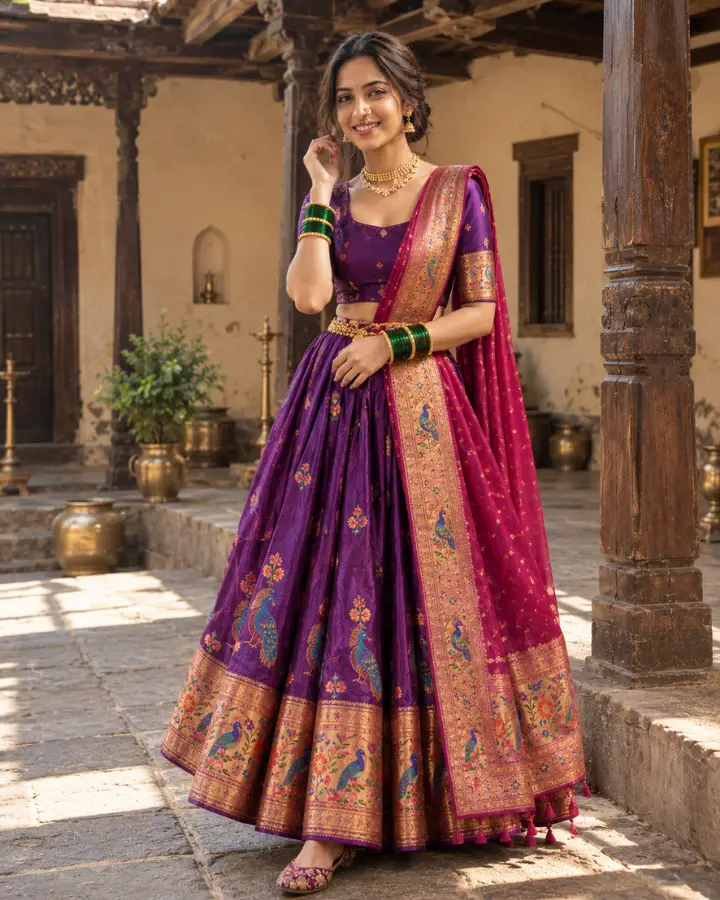
Keep the uploaded facial identity exactly unchanged from my reference photograph. Preserve the original facial proportions, eyes, eyebrows, nose, lips, cheeks, jawline, skin tone, pores, natural marks, and facial texture. Dress me in a Paithani inspired Maharashtrian lehenga using rich purple silk, traditional peacock motifs, broad zari borders, a structured flared skirt, matching blouse, and a contrasting dupatta with woven detailing. Add Maharashtrian style nath, thushi necklace, traditional earrings, green glass bangles mixed with gold bangles, kamarpatta, and embroidered footwear. Show the entire outfit from head to toe. Set the scene inside an old Pune style wada courtyard with wooden pillars, aged lime walls, stone flooring, brass utensils, and sunlight entering through an open section of the roof. Pose me standing on one side while slightly leaning against a wooden pillar, with one hand holding the dupatta and one foot naturally angled forward. Capture from a diagonal rear three quarter camera position using a 45mm lens while keeping my face visible. Use realistic sunlight, textile reflections, natural pores, and imperfect shadows. NEGATIVE PROMPT: changed face, identity loss, plastic skin, glass skin, fake pores, distorted jewellery, malformed fingers, duplicate ornaments, synthetic silk, artificial wada, fantasy lighting, excessive HDR, oversmoothing, text, watermark.Prompt 9. Tamil Pattu Pavadai Look
I kept the South Indian styling very specific here with pattu pavadai, temple jewellery, silk borders, and jasmine decoration. The low camera position makes the full skirt and traditional footwear much easier to show.
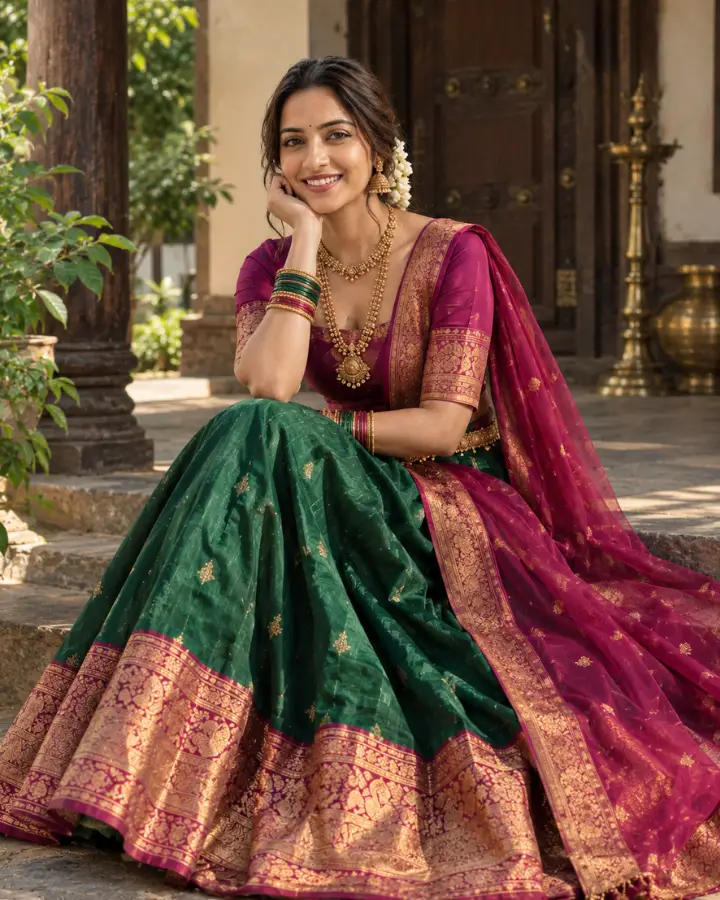
Preserve my uploaded face exactly as shown in the source photograph and do not redesign any facial feature. Keep the same eyes, eyebrows, nose, lips, cheeks, jawline, skin tone, pores, natural marks, and facial proportions. Create a traditional Tamil pattu pavadai with a rich emerald green silk skirt, magenta silk blouse, broad gold zari border, and a contrasting silk drape arranged naturally. Add South Indian temple jewellery, jhumkas, layered gold necklaces, bangles, waist belt, anklets, and traditional footwear, with a neat jasmine flower arrangement used only as a natural styling detail. Show the full outfit clearly from head to toe. Place me outside a genuine South Indian heritage house with weathered wooden doors, stone flooring, brass vessels, and soft early morning sunlight. Pose me walking toward the camera while one hand lightly gathers the silk drape and the other remains relaxed. Use a low 28mm camera angle several steps away to capture the complete silhouette. Keep realistic silk folds, natural pores, subtle skin variation, accurate shadows, and restrained colour. NEGATIVE PROMPT: facial alteration, identity mismatch, glass skin, plastic texture, fake pores, beauty filter, distorted hands, extra fingers, duplicated jewellery, artificial flowers, fake architecture, excessive glow, harsh HDR, cartoon rendering, text, watermark.Prompt 10. Assamese Mekhela Chador
I chose the Assamese mekhela chador for the final look because its silhouette is completely different from the other outfits. The woven textile, traditional jewellery, wooden home setting, and seated composition make it feel like a genuine regional fashion photograph.
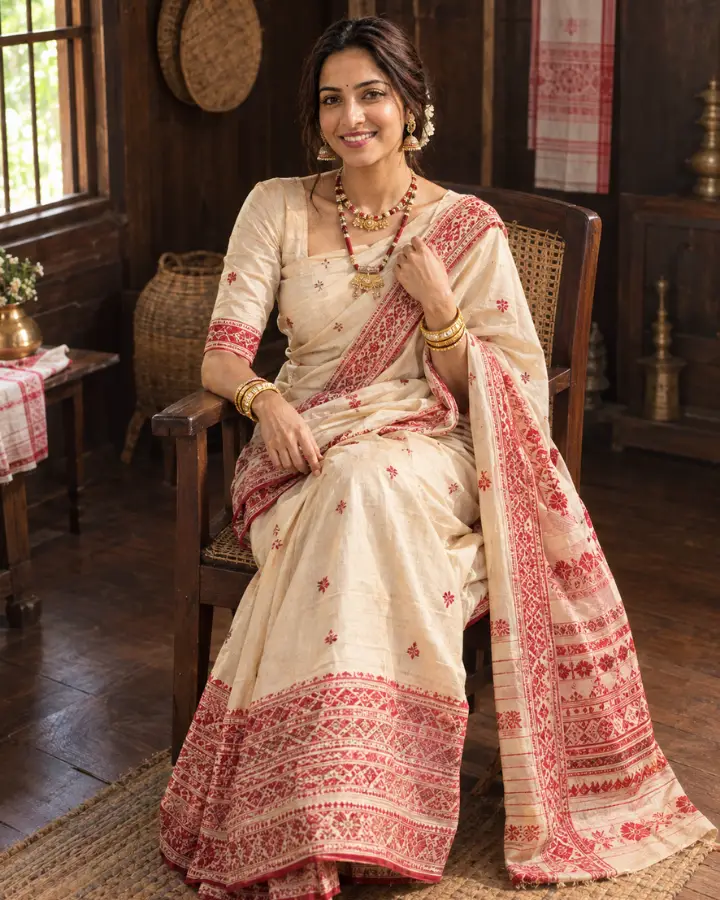
Use the uploaded photograph as the sole identity reference and preserve my exact face without alteration. Keep the original facial structure, eyes, eyebrows, nose, lips, cheeks, jawline, skin tone, pores, natural marks, and facial proportions unchanged. Create a traditional Assamese mekhela chador using ivory silk with deep red woven borders and authentic Assamese textile motifs, with the mekhela wrapped and pleated correctly around the lower body and the chador arranged naturally across the upper body. Add traditional Assamese jewellery including thuriya style earrings, gam kharu bangles, a layered necklace, and subtle decorative accessories. The entire outfit must be visible from head to toe. Place me seated naturally on a wooden chair inside a real Assamese heritage home with aged timber walls, woven baskets, cane furniture, and soft window light. Capture from a slightly elevated 40mm angle while keeping the full clothing visible. Let one hand rest naturally on the chair and the other hold the edge of the chador. Show realistic woven fibres, natural skin pores, small fabric wrinkles, imperfect shadows, and genuine indoor exposure. NEGATIVE PROMPT: face alteration, identity mismatch, plastic skin, glass skin, artificial pores, excessive smoothing, distorted hands, extra fingers, duplicate jewellery, synthetic fabric, fake wooden interior, excessive HDR, artificial glow, cartoon finish, text, watermark.How To Customize These Prompts
You can change small details without changing the main idea of the prompt. I usually change only one part at a time because it makes the result easier to understand.
- Change the outfit colour: Replace the main skirt, blouse, or dupatta colour with a shade you personally like. Keep the fabric and regional details unchanged if you want the same traditional feel.
- Change the jewellery: You can make the jewellery simple for a daily look or richer for weddings and festivals. I prefer keeping jewellery suitable for the regional outfit instead of adding random pieces.
- Change the pose: Try walking, sitting, turning slightly, holding the dupatta, adjusting an earring, or looking away from the camera. Natural hand movement usually makes the photo feel less staged.
- Change the mood: Add a soft smile, calm expression, confident mood, festive feeling, or candid moment. Small expression changes can make the same outfit look completely different.
- Change the lighting: Try soft morning light, window light, open shade, indoor daylight, or warm evening light. I normally avoid very strong lighting because it can make skin and fabric look less natural.
- Change the setting: Keep the traditional styling but move the scene to a courtyard, heritage home, haveli, garden, wedding venue, or simple indoor space.
My tip: I would keep the identity instructions unchanged while customizing the prompt. Those details are important when you want the same person to remain clearly recognizable.
Which Poster Size Is Best for Your Photo?
| Use | Size | Ratio |
|---|---|---|
| Instagram Feed | 1080 × 1350 px | 4:5 |
| Instagram Story | 1080 × 1920 px | 9:16 |
| 1000 × 1500 px | 2:3 | |
| Facebook Feed | 1080 × 1350 px | 4:5 |
| WhatsApp Status | 1080 × 1920 px | 9:16 |
| Website | 1200 × 1500 px | 4:5 |
For these full outfit photos, 4:5 is my preferred size because it gives enough space to show the complete look without making the subject too small.
Where You Can Use These Traditional Lehenga Photo
These regional outfit edits can work well for Instagram posts, festival content, wedding related posts, profile photos, fashion pages, personal albums, and traditional style inspiration.
- Instagram posts: Use full length compositions when the outfit, jewellery, footwear, and background are important parts of the photo.
- Profile photos: Choose a closer composition where the face, hairstyle, and jewellery are still easy to see.
- Festival posts: Rajasthani, Gujarati, Punjabi, Maharashtrian, and other regional looks can fit different festive themes.
- Wedding content: Rich fabrics, detailed embroidery, traditional jewellery, and heritage backgrounds can create a more dressed up feeling.
- Fashion content: These prompts can help show different regional styling ideas without using the same outfit in every image.
Social Media Publishing Tips
I prefer keeping captions simple for these photos. The outfit itself already gives the post a strong visual identity.
- Mention the actual regional outfit in the first line.
- Add one personal thought about the look instead of filling the caption with keywords.
- Keep hashtags connected to the outfit, region, and occasion.
Try tags such as #TraditionalLook #IndianFashion #LehengaLook #EthnicWear #DesiFashion #TraditionalOutfit.
For a festival or wedding post, I would add one relevant occasion hashtag rather than using a long list of unrelated tags.
If you are sharing different regional looks together, mention each outfit by its proper local name. This makes the post more useful and gives viewers a better idea of what they are seeing.
FAQ
Can I use these prompts in Gemini AI?
Yes. I tested the main results for this collection in ChatGPT, and that is where the examples were created. You can also try the same prompts in Gemini AI by uploading your photo and then copying and pasting the prompt.
Will these prompts work with any photo?
They can work with different types of photos, but a clear source image usually gives me better results. I prefer a photo where the face is visible and not covered by strong filters or effects.
Can I change the lehenga colour?
Yes. Changing the main colour is one of the easiest customizations. I would keep the regional fabric, embroidery, jewellery, and outfit structure unchanged if you want the look to remain authentic.
Why does the complete lehenga sometimes get cropped?
This usually comes from the original framing or the generated composition. I solve it by clearly asking for a full length image with the complete outfit and footwear inside the frame.


